Pluto's Planetary Status: Unraveling the Controversy Surrounding Pluto
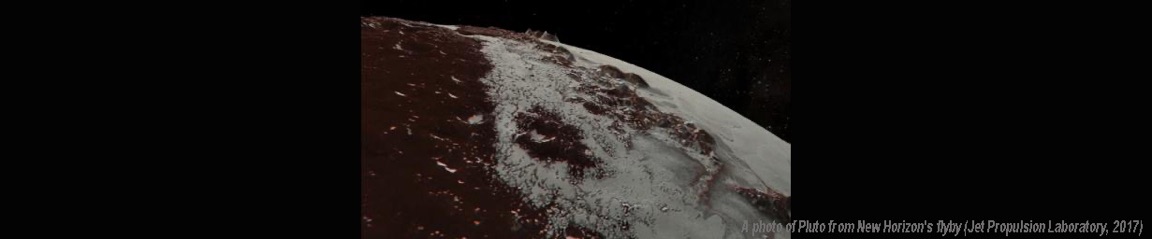
Scientific Impact
The IAU's controversial resolution resulted in a significant amount of retaliation as this was seen as a demotion by the public. Among scientists there also resulted in confusion as many valid arguments didn’t come to conclusions. However, this new classification system resolved the debate, and left a lasting impact on the astronomical world as a founding principle of how we define our world and others.
"Many planet scientists were disgruntled over the 2006 IAU decision, which they said involved a vote of just 424 astronomers out of some 10,000 professional astronomers and many other planetary scientists around the globe.” —Jeanna Bryner, Space.com
These scientists all had unresolved problems with the IAU's resolution.
“[The IAU's] definition was dissatisfying to three very different groups: exoplanet astronomers, galactic astronomers, and planetary scientists.” —Ethan Siegel, Forbes
Galactic Astronomers
"For the galactic astronomers, what do you do for rogue planets? If you don't have a parent star to orbit at all — either because you were born without one or you were ejected from your solar system — does that make you any less of a planet?" —Ethan Siegel, Forbes
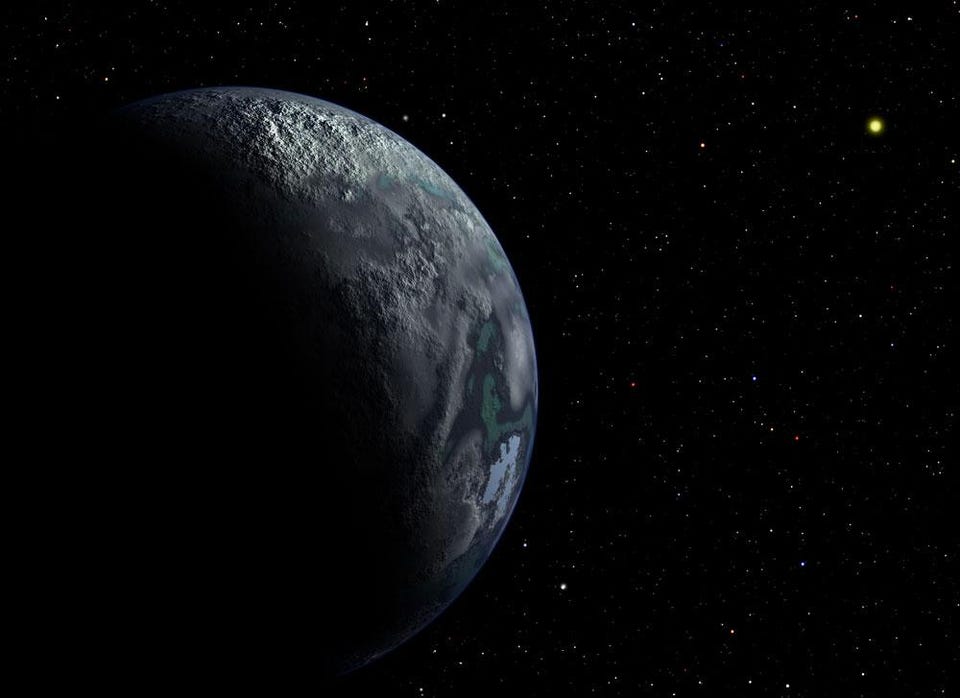
Artistic rendering of rogue planets. (Forbes, 2018)
Exoplanet Astronomers
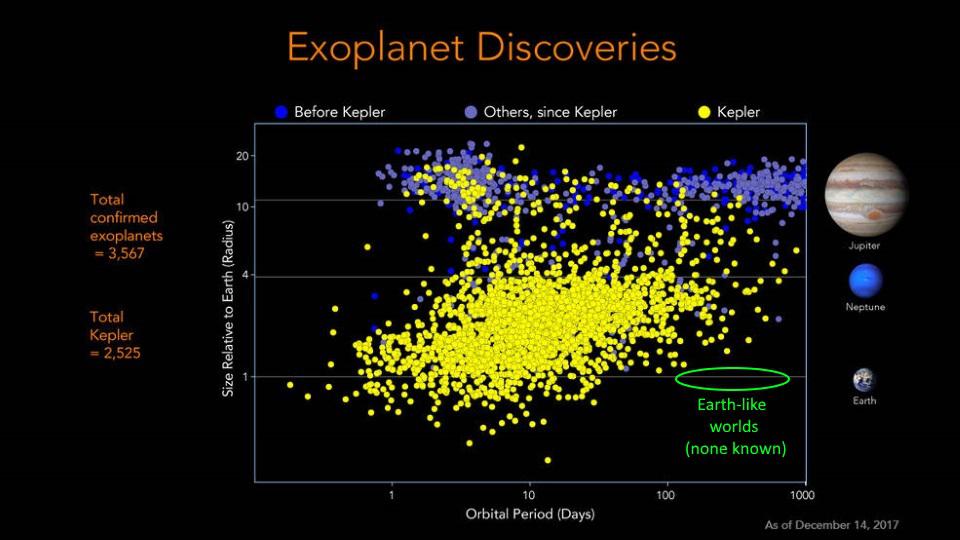
Graphed exoplanet discoveries. (Forbes, 2019)
New objects that had similarities with Pluto challenged what constituted a ‘planet’ during the debate, yet their numbers were widely underemphasized. This shows a portion of the 4,000 confirmed exoplanet discoveries that are not considered planets due to the resolution.
“The exoplanet astronomers have a very compelling argument. Why would a body orbiting our star, the Sun, be classified as a planet, but the worlds around any other star couldn't be?” —Ethan Siegel, Forbes
Planetary Scientists
David Grinspoon and Alan Stern, both planetary scientists, argued that planets should be defined solely on their geophysical composition. With the many advantages to their proposal, there are also arguments against it.
"Should an object's position in its Solar System determine what a planet is? Or should only the intrinsic properties of the world matter? Should we ignore, completely, the connection between planets and solar systems, stars, their formation, and the gravitational dance that has always fueled our knowledge and curiosity about them?" —Ethan Siegel, Forbes
David Grinspoon and Alan Stern's proposal would include ignoring the location of objects and prove a solution to both problems presented by exoplanet and galactic astronomers.
The IAU's Third Criteria
"(c) has cleared the neighbourhood around its orbit." —IAU
“It must be emphasized at the outset that a planet can never completely clear its orbital zone, because gravitational and radiative forces continually perturb the orbits of asteroids and comets into planet-crossing orbits.” —Jean-Luc Margot, The Astronomical Journal
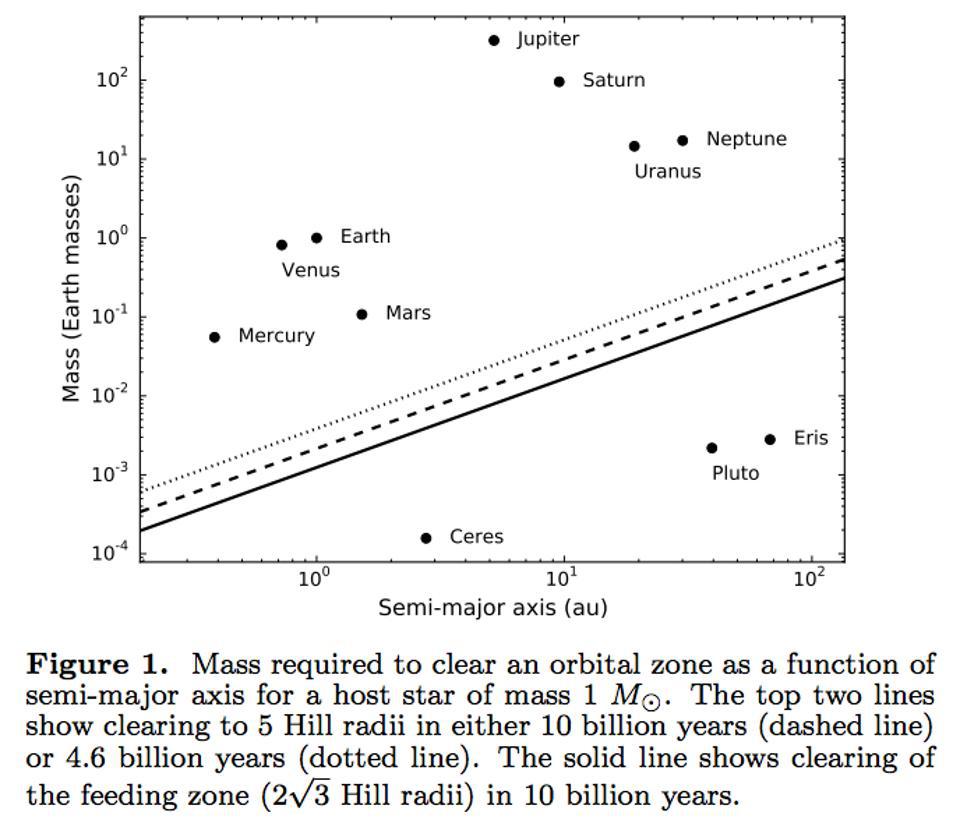
Graphed results of Jean-Luc Margot’s metric. (The Astronomical Journal, 2015)
This graph displayed what Jean-Luc Margot mathematically proved to determine whether a planet had cleared its orbital zone. This could be used as a more accurate way to specify the third criteria of the IAU's definition of a planet.
The third criteria became another controversial factor against the IAU’s Resolution by many astronomers. It was seen as an impossible standard until Jean-Luc Margot suggested that it was rather referring to Soter’s “dynamical dominance” criterion. Based on this, Margot created a metric to clarify the third criteria of the classification system for planets.
"Here, we propose a simple metric that allows for the quantification of the third requirement and the extension of the definition to planets orbiting other stars." —Jean-Luc Margot, The Astronomical Journal
Pop Culture Impact
As well as having a significant impact on the scientific world, the new classification system had a large impact on the public at large. This resulted in political cartoons, memoirs, and song lyrics references. This also led to protests throughout the nation. In places such as New Mexico this resulted in bills declaring Pluto a planet.
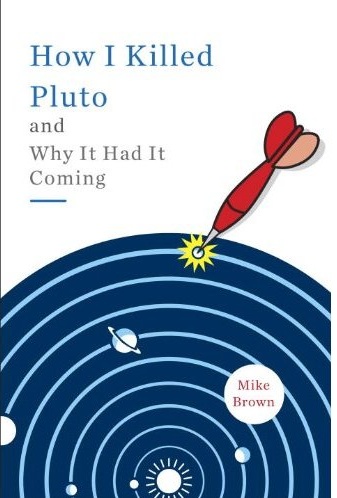
Memoir by Mike Brown. (California Institute of Technology, 2010)
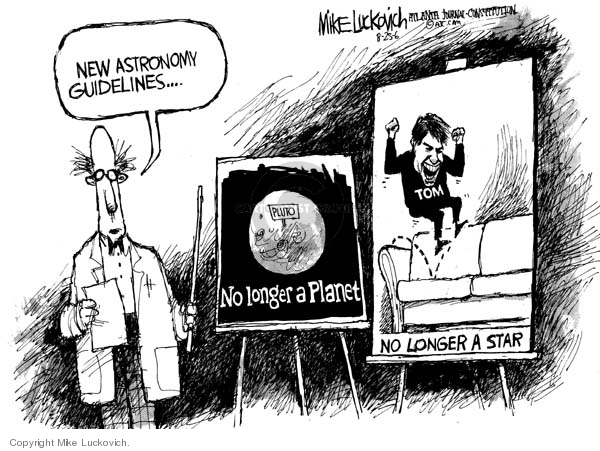
Political Cartoon by Mike Luckovich. (Cartoonist Group, 2006)
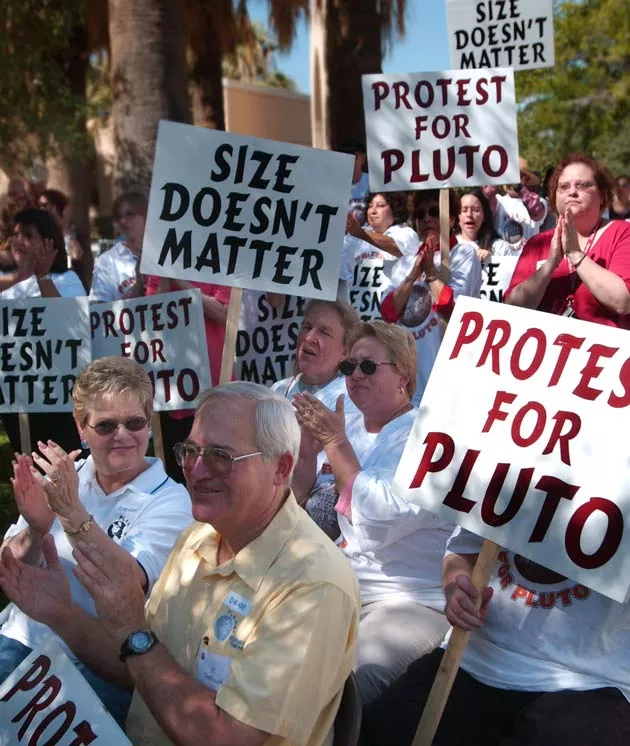
Clyde Tombaugh's family protesting. (Space, 2006)
Parody to the song Encanto. (Youtube, 2022)
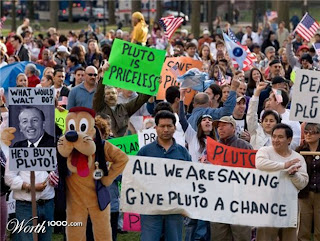
Pluto protestors. (Bunthorne's Person, Place, or Thing, 2011)
Clip from an episode from Psych. (ION Television, 2006)
"We may be headed towards a world where astronomers and planetary scientists work with very different definitions of what attains planethood, but we all study the same objects in the same Universe. Whatever we call objects — however we choose to classify them — makes them no less interesting or worthy of study. The cosmos simply exists as it is. It's up to the very human endeavor of science to make sense of it all.” —Ethan Siegel, Forbes