“It’s very tedious work and you go through tens of thousands of star images. I came to one place where it actually was, turned to the next field, there it was. Instantly, I knew I had a planet beyond the orbit of Neptune. That was the most instantaneous thrill you can imagine. It just electrified me!” —Clyde Tombaugh, American Academy of Achievement
Pluto's Planetary Status: Unraveling the Controversy Surrounding Pluto

Historical Context
Pluto was discovered and classified as a planet in 1930. Later, the differences between Pluto and the eight classical planets challenged this classification which changed former perspectives of Pluto’s history.
“In 1906, Percival Lowell, a wealthy Bostonian who had founded the Lowell Observatory in Flagstaff, Arizona in 1894, started an extensive project in search of a possible ninth planet, which he termed “Planet X.” By 1909, Lowell and Pickering had suggested several possible celestial coordinates for such a planet. Lowell and his observatory conducted the search until his death in 1916, to no avail.” —Library of Congress
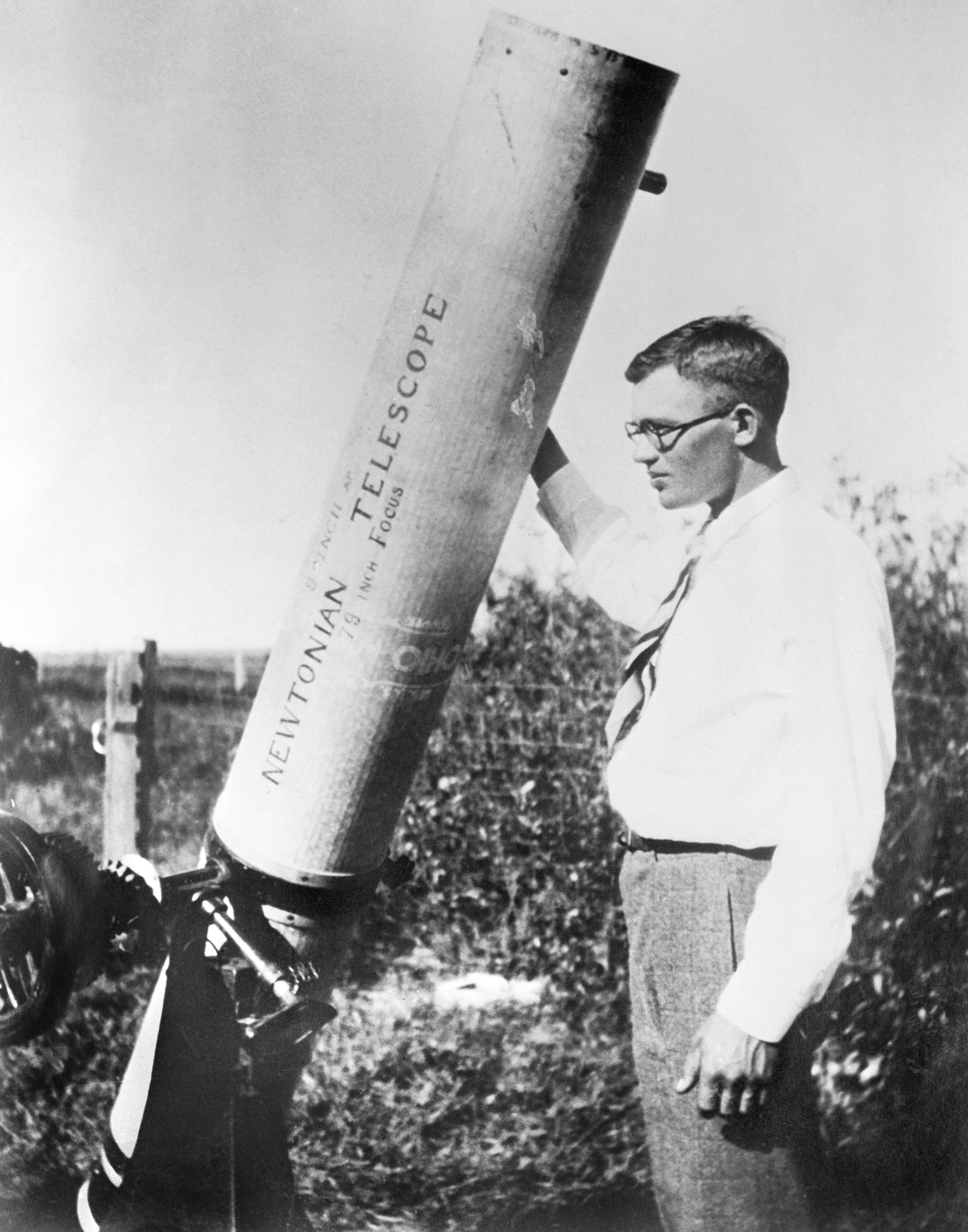
Clyde Tombaugh and his Newtonian reflecting telescope. (American Academy of Achievement, 2019)
Clyde Tombaugh built this telescope out of old farm parts and later used it to get the job offer at the Lowell Observatory.
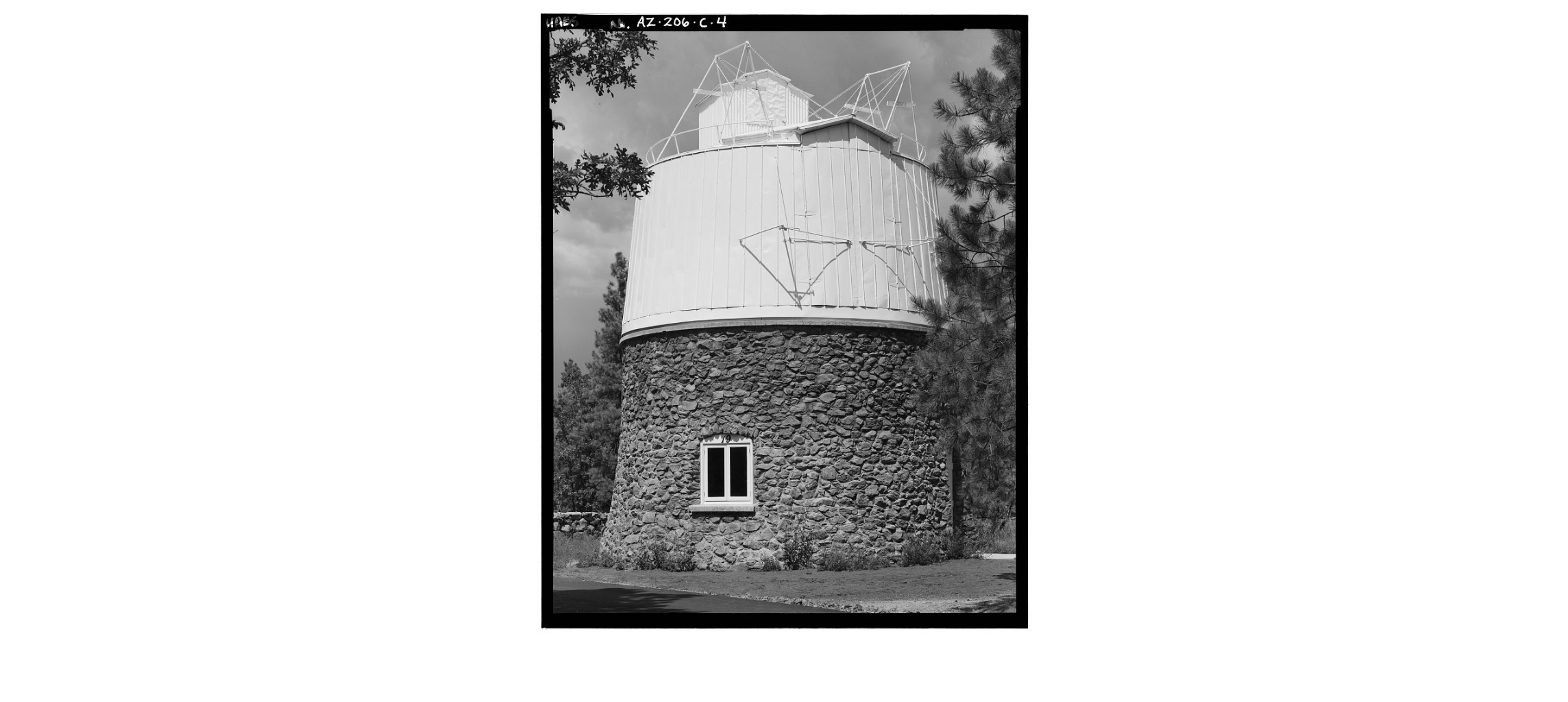
Lowell Observatory in Flagstaff, Arizona. (Library of Congress, 1933)
“Using these homemade telescopes, he [Clyde Tombaugh] made drawings of the planets Mars and Jupiter and sent them to Lowell Observatory in Flagstaff, Arizona. The astronomers at Lowell were so impressed with the young amateur’s powers of observation, they invited him to work at the observatory.” —American Academy of Achievement
Having been hired without a degree, Clyde Tombaugh began working at the Lowell Observatory, where the search for “Planet X” had commenced. There, he began to systematically photograph the night sky at intervals. After which, he would compare the photographic plates using a machine called a blink comparator to determine if anything had altered position.
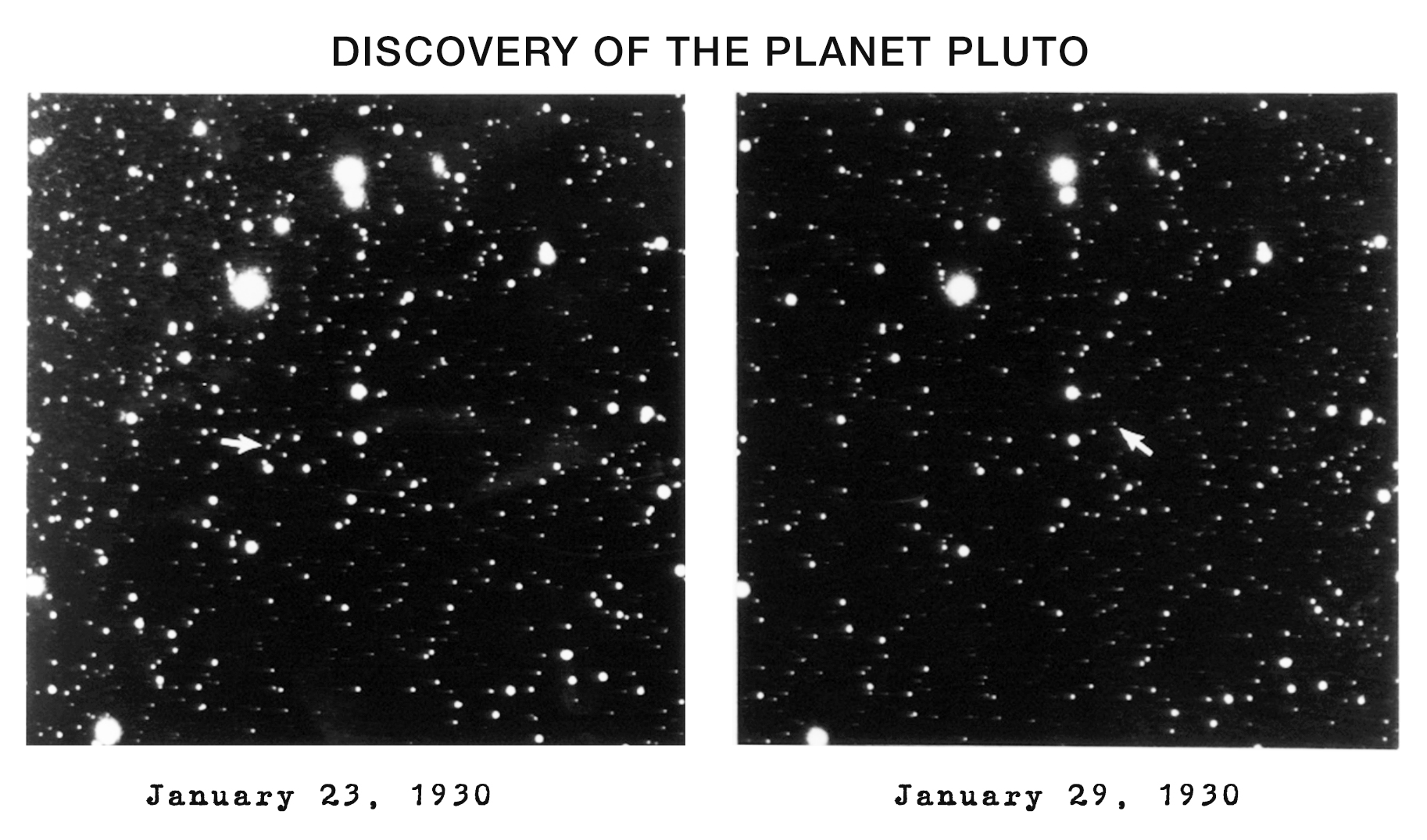
Small section of plates Clyde Tombaugh compared to find Pluto. (American Academy of Achievement, 2019)
“Right away, the solar system's newest candidate was considered an oddball. Its orbit is so eccentric, or far from circular, that it actually gets closer to the sun than Neptune for 20 of its 248-years-long trip.” —Space.com
Several years later, astronomer Brian Marsden began making claims against Pluto's classification as a planet. However, the public was too excited to listen, and a miscalculation of an impending asteroid collision with Earth gained him notoriety. Likewise, his ideas were ignored until 1992 when he correctly made an observation on a discovery. This caused astronomers to stop discrediting his views and helped start the debate.